
This past week’s AMI had a pretty fascinating interview with R Chaim Ausband about his father R Eizik. Now, R Eizik was a great Talmud Chacham, a Holocaust survivor, and a person dealing with his own personal traumas. That said, AMI should not have printed the following stories as evidence of greatness. These stories are not ok.
First:
“When my father was a young man, my mother once served him a meal. He gave no indication that anything was out of place; he simply sat there quietly until she finally realized that she had forgotten to give him a fork. He wouldn’t eat without a fork, so he said nothing, because in Kelm one doesn’t draw attention to what is missing. One doesn’t inconvenience the host. One doesn’t say ‘I need.’ One absorbs the discomfort quietly and moves on.
“Even when I was growing up, these seemed like strange hanhagos,” Rav Ausband says with a smile. “It wasn’t until I was much older that I understood that it was strange for the hamon am, regular Yidden. My father’s hanhagos were ones that people describe as belonging to truly great people.”
While it cha”v to critique R Eizik, nowadays, truly great people would gently request the fork. Today, such behavior is indicative of ‘silent treatment’. While R Eizik’s marriage and wife may have been perfectly ok with this, this behavior is not ok and certainly not a mussar lesson of not inconveniencing the host. (Obviously, it makes perfect sense for R’ Eizik’s son to justify this behavior in his head for himself. The critique is solely on AMI for printing it.)
He describes the Shabbos Seuda:
“There might have been the occasional exception,” Rav Chaim Mordechai reflects, “but as a general rule the Shabbos seudah in our home was kulo kodesh. It bore no resemblance to an ordinary weekday meal that most people are accustomed to.”
The structure was unvarying.
“My father would return home from yeshivah after Minchah and Maariv, take his place at the table and eat. My mother, a”h, would look at him and ask, ‘Nu, vos is der vort fun haynt—So what is today’s dvar Torah?’ That was the conversation. There was no schmoozing or devarim beteilim.”
While this may have worked out for R Eizik, this is horrible advice for modern chinuch. One’s shabbos seuda should have shmoozing. It should not have unvaried structure where the kids sit in silence and the father says a devar torah.
Worse, and this is the most troubling section of all:
Going back to Rav Eizik, Rav Chaim Mordechai describes his father’s approach to chinuch with the exasperation of a son who required decades to fully appreciate what was given to him.
“My upbringing was very strong and very strict, and it is genuinely bewildering to anyone who is shaped by modern hanachos about how to bring up children,” he says. “My father was either completely unaware of or actually opposed to the idea that children need breathing room, and that learning all day and night requires some form of relief. He pushed and pushed and drove me crazy.”
He also says that his father learned with them constantly. “I would say that he learned the most with Avraham, z”l, who was the oldest. He also learned a lot with my brother Eliyahu, who still lives next to the yeshivah; unfortunately, he needs a refuah shleimah. My father refused to let me go outside and play with my friends. I takkeh don’t know if that was what was best for me,” he says with a smile.
“It seems to have worked out well,” I counter, but Rav Ausband waves my remark away and continues.
“He drove me crazy!” R’ Chaim Ausband says. Yet the interviewer refuses to accept that R Eizik could have been mistaken and pushes back that it seems to have worked out well! He also describes it as ‘exasperation of a son who required decades to fully appreciate what was given to him’ when a far more accurate description is ‘still struggles with trauma from his upbringing’. This anecdote is the most troubling because it reveals a common pattern: Not-ok behavior being justified and normalized as a good thing simply because a great person did it.
Does this have practical effects? It does! The rest of the article is R Chaim Ausband decrying Bein Hazmanim and pushing bochrim to learn through it, seemingly oblivious to the fact that he is echoing his father pushing and pushing:
Before bein hazmanim begins, sit down and decide: What am I going to learn? From what time until what time? In which shul or beis midrash? Will I review old sugyos or start something new? Will I learn the halachos of an upcoming Yom Tov or maybe a masechta I’ve always wanted to learn?….
….The Gemara describes the difference between yoshvei beis hamidrash and yoshvei kranos, those who sit and learn and those who sit idly at street corners. Those in the latter category live bitter lives. They are always searching for something to do, trying to fill an emptiness. By contrast, there are so many masechtos and sugyos that we’ve always wanted to explore. Bein hazmanim can become a time when a bachur finally gets to learn the things that aren’t part of the regular seder.”
While I’m not going to psychoanalyze the emptiness line (although it’s interesting that that R Chaim Ausband touches on it quite a few times during the interview) and I will grant that the attitude R Ausband expresses can be very healthy for some bochrim, as a whole this attitude can be dangerous. It’s ok for a bochur to want a break. Sometimes its ok to kill time. This obsession we frum people have about not wasting a second pushes many people to greatness but also many people to insanity and we have to remember that.
But this is AMI. What else do you expect from an unrepentant defender of Lev Tahor (R’ Frankfurter still hasn’t apologized for defending them in 2012)? He’s clearly not a person who would recognize abusive behavior if it bit him on the face.
However Artscroll is an entirely different story than AMI.
I was SHOCKED to read the following in an ArtScroll gadol book.
In my mind, ArtScroll is sort of like the Disney of frum publishers. There’s a formula I expect it to fill and lines I expect not to be crossed. When I read an Artscroll gadol bio, I am not looking for facts. I want inspo-fluff, where i read mostly true stories carefully represented to make me inspire to be greater person. Artscroll does this stuff great, and unlike other bloggers I’m a big fan. The R’ Pam, R Chaim and R Belsky biographies all inspired me. I know that they omit troublesome parts of their lives. I know they may manipulate stories to remove the edges. That’s fine and expected. I’ll read Seforimblog for the real facts. When I read Artscroll I want clean kosher entertainment. What I do not want to read is a horrifying description of manipulative abuse shinily polished as beautiful inspiriation.
But that’s what you get in the book Miracle Baby.
This is a shocking book, from the Jesus vibes1 to the book totally ignoring the fact that an 88 year old having a baby boy means he is pretty much guaranteed to be an orphan by the time he is Bar Mitzva.
(FTR, I am a pro-natalist. I am happy this baby is born and I think once we start asking ourselves to make every baby’s life perfect at birth we are going to see a result of plummeting birth rates. It is better to be alive than not - and I think that this is true for this baby as well.2 It is furthermore very inspiring that the Kushelevsky bloodline and name are continuing and Hashem should help him see much nachas from the baby.3)
But what most shocked me in the book is the way his engagement was normalized. Now a reminder: there is a mitzva to judge a talmud chacham favorably, and so please keep in mind that the following may not be representative of what actually happened. But we can all agree that the the following should not have been printed and the way it was depicted is wrong:
R Kushelevsky’s rebbetzin relates her reaction after the shidduch was proposed:
“This is an unbelievable opportunity that I know you have been waiting for,” he told me when I called him back. “The Rosh Yeshivah is on a very lofty level. Among other things, he was the chavrusa of the Brisker Rav.” I responded that I needed some time to think about it. And I wanted to speak with the author of “Bilvavi Mishkan Evneh,” Rav Itamar Schwartz. “Anyway, the Rosh Yeshivah doesn’t even want to look into it until after Tishah B’Av.” Rabbi Travis replied, “No, he wants to meet sooner.” “When?” I inquired. “Tonight!” was the reply….
She continues:
….Without having time to think about it any further, I started preparing for the date that night. In a daze, I put the children to bed and arranged for a babysitter, all the while wondering what I was going to wear. Soon I found myself in a cab on my way to Yerushalayim for the second time that day. I wanted to quiet the flood of bewildered thoughts arising in my head, so I listened to a shiur from Rabbi Sitorsky on Chodesh Av. Perhaps trying to wrap my head around an insight of the Bnei Yissaschar would distract me enough from the feelings of panic that threatened to overwhelm me. I arrived at the apartment where the meeting would take place and walked into the room where Rav Zvi was sitting. He rose from his seat, and I stood there in awe, taking in his holy presence.
I sat down across from him and froze. “What are you doing here?” I thought to myself. “This is too surreal!” All those thoughts I had tried to push out of my mind came flooding back. I was overwhelmed as the reality of having a shidduch meeting with one of the gedolei Yisrael set in. Not knowing what else to say, I rambled something about the month of Av that I had just heard on the tape. Rav Zvi elucidated on what I had said as I nervously played with my scarf under the table like a child. And then, about eleven minutes into the meeting, Rav Zvi looked me in the eye and said, “So when do you want to get married?”
WTF.
I was completely taken aback by the question. Tactfully I changed the topic and started talking about one of the episodes with Yosef HaTzaddik. He indulged me for a few minutes, then asked a second time, “So on which date do you want to get married?” I again avoided answering by asking another question related to a Torah topic. When I tried this a third time, he gave a small zetz on the table and said, “There is a shailah on the table. Three times I asked a question. I want an answer! When do you want to get married?”
This is not ok. This is not normal. This should not be published.
I realized that I wasn’t going to get out of giving an answer, so I said, “Tu B’Av is an auspicious day to get married.” Rav Zvi responded, “I was thinking the same thing.” I walked out of the apartment and turned onto Bar Ilan Street at around midnight. I was in a daze and started limping down the street, wondering if I was dreaming. Could it be that I’m engaged to one of the gedolei Yisrael, with a wedding date in eleven days? Is this real? Without realizing it, I found myself at the Bar Ilan-Shmuel HaNavi junction, where a bus to Beit Shemesh was waiting. I absentmindedly boarded it and sat down.
Not surprising. You were just manipulated into marriage.
I was staring into space when I saw an acquaintance walking down the aisle toward me. It didn’t make sense for her to be in Yerushalayim at such a late hour, but there she was. She started talking to me in a bubbly voice. “You look so nice! Were you on a date?” “I think so,” I answered uncomfortably, and then proceeded to relay to her what had just happened and how confused I was over it. “If I were single,” she said, “and Rav Ovadia Yosef asked me to marry him, I would jump at the chance!” The entire way home to Beit Shemesh she gave me chizuk. It was clear to me that Hashem had arranged for her to board the bus just when I needed it. It was the chizuk she gave me that helped me to process what had happened that night and to realize that even though it was quite unusual, I couldn’t allow the yetzer hara to hide from me the awesomeness of what occurred.
(The story continues under a new chapter, Doubts:)
When I arrived home, the first thing I did was recite Mizmor L’Sodah. But I didn’t say it with as much passion as it deserved. I was still being influenced by the yetzer hara, as my mind dwelled on the same thought: “A proposal in eleven minutes, a wedding in eleven days, more than thirty years older than you...” Realizing that I wasn’t fully embracing the tremendous gift that had been handed to me, I berated myself. “For so long you’ve been asking Hashem to give you a talmid chacham as a husband, and you’ve hit the jackpot! A gadol b’Yisrael! And now you’re not sure? You just received the biggest diamond from Hashem’s treasure house of free gifts, and you’re doubtful?” Taking my own words to heart, I began to embrace the special gift that Hashem had given me. Throughout that night I was in a frenzy. I kept waking up and saying Mizmor L’Sodah, but with more fervor and sincerity than before. I felt horrible about my initial reaction to the immense gift that Hashem in His infinite kindness had given me, so I kept on getting up again and again to say Mizmor L’Sodah with more sincerity and kavanah.
I don’t think anyone could write a more damning expose of Chareidi Yeshivish hashkafa and power dynamics than this date, reaction and thought process. I don’t need to elaborate on how unacceptable this is.
Just to be clear: My criticism is not on R Kushelevsky and his wife. They are both adults and I don’t know them well enough to be sure that this is the way it went down. The tone could have been way different. There could be more to the story not printed. It could be the dating style R Kushelevsky was used to is a ‘beshow’.4
What I do know is that the story as printed is a textbook example of spiritual abuse.
From Gemini (yes I could’ve wrote this myself, but I wanted to be as clinical and correct as possible):
What exactly is spiritual abuse? At its core, it occurs when a religious framework or leader uses their spiritual authority to manipulate, control, or override a person’s autonomy and boundaries.
Looking at the story as printed, it hits every single marker:
The Massive Power Imbalance: A woman is sitting across from an intimidating, revered Gadol b’Yisrael. He holds all the religious and social authority in the room. Eleven minutes into the meeting, he demands a wedding date, leaving her frozen and overwhelmed.
Overriding Clear Boundaries: She tries to politely deflect and change the subject three separate times. This is a clear, natural boundary. But because of his absolute spiritual authority, he feels entitled to give a zetz on the table and demand an answer. She doesn’t agree because she is ready. She agrees because the sheer weight of his religious stature makes it functionally impossible for her to say no.
Weaponizing Religious Concepts: As she processes the night, her internal alarm bells start screaming about the rushed proposal and the thirty-year age gap. These are healthy survival instincts. Yet, the book gaslights her by labeling her protective hesitation as the work of the yetzer hara.
Reframing Panic as Spiritual Deficiency: She is forced to berate herself for doubting “the biggest diamond from Hashem’s treasure house.” The religious framework is weaponized to make her feel guilty for her own panic, turning her fear into a lack of bitachon and her submission into a spiritual victory.
When ArtScroll publishes this beautiful, inspirational gadol romance, here is what they are teaching their readers: They are teaching girls (and boys - but especially girls) that their personal boundaries are irrelevant in the face of a Gadol and his Torah. They are teaching that when your whole body screams that a situation is manipulative or moving too fast, you shouldn’t protect yourself. Instead, what you need to do is crush that instinct, call it the yetzer hara, and force yourself to say Mizmor Lesoda (and maybe the whole tehillim) a few hundred times.
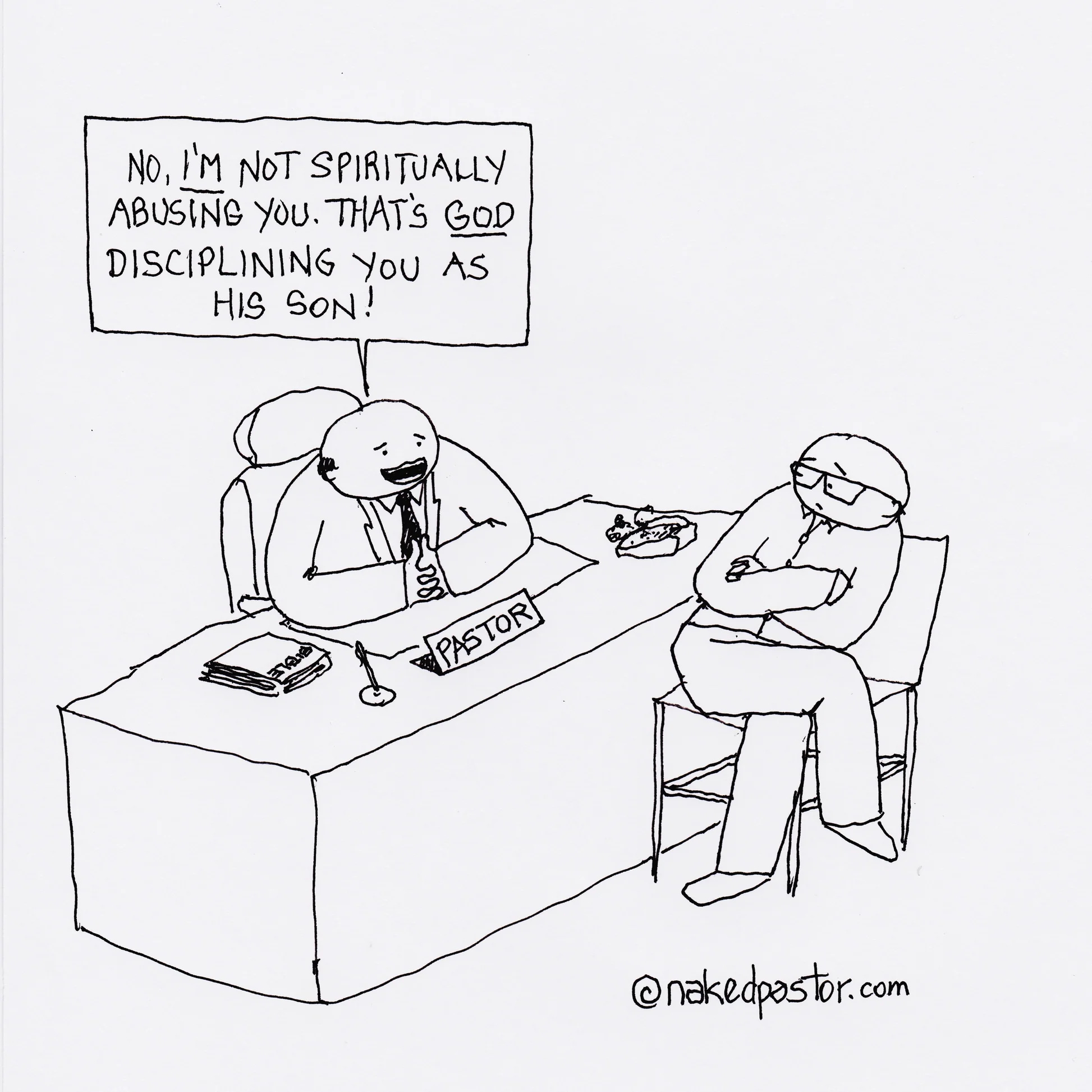
My criticism here is on ArtScroll. I cannot believe this passed three or four editors and the hashkafic board. This story and this interaction is not ok. Normalizing abusive thinking processes is not ok. Normalizing one’s inner alarm clock and danger alerts as ‘doubts from the yetzer hara’ is not ok. This story should not have been printed as is and it is a damning reflection of yeshivish society that this unhealthy behavior is thought of as healthy, normal, and inspiring.

1 comment:
Your coconspirator is really grabbing at straws to demonize Charedim. She’s an adult & she already agreed to go out with a man 40 years her senior. It doesn’t matter that he proposed to her immediately. The two of you should be ashamed of your tzebissenkeit
Post a Comment