“I don’t speak because I have the power to speak; I speak because I don’t have the power to remain silent.” Rav Kook z"l

Thursday, May 15, 2025

This Day in History! May 14, 1948 The Jewish State of Israel is Declared!


92 Years of Dingells in Congress!


Bookmark and Remember these clips


How I Went from Hating Jews to Becoming One


Igor Pivnev, who eliminated 13 Hamas terrorists while defending his family and community on October 7, was found dead in an apparent suicide.

Israeli police officer First Sergeant Igor Pivnev, aged 32 from Yated in southern Israel, took his own life on Tuesday.

Pivnev served in the police and was known for eliminating 13 terrorists during the Hamas attack on southern Israel on October 7th, 2023.

On the morning of the massacre, Pivnev was stationed in Hebron. When he heard about the attack, he decided to return to his home in Yated. On his way, he fought terrorists in several locations, eliminated 13 of them, and after reuniting with his wife and daughters, went out again and joined the local security response team.

Three months ago, his wife, Chani Leiderman-Pivnev, wrote a heartwrenching post about soldiers and police officers who are suffering mentally: "If there are people around you are have been sinking since that Saturday, turn the world on its head so that they can get the proper professional help and treatment. Don't try to save them alone, you can't, and things will just get worse. Fight the feelings of guilt - it's not your fault."

In an interview with the Police Spokesperson last year, Igor recounted the fighting: "The scenario in my head was that I would get home and see a lifeless house, but I put fear aside. From Kibbutz Nir Yitzhak, I headed home, but I saw terrorists walking toward the kibbutz cowshed. Then a shootout began, lasting a few minutes. On the way from the police station to my community, I saw a suspicious white vehicle and stopped on the side of the road. I identified terrorists, I shot at them, and eliminated them.

"We had drills for situations like these, but I never believed that we would confront so many terrorists. When I heard about what happened in Kibbutz Be'eri, I imagined how I'd be left without a wife and children, but I remained optimistic the entire time."

00:00


Terrorist Murder Pregnant Israeli and Shoot Her Husband in Samaria as They Drive to Delivery Room


The Israeli military is hunting for a terrorist who shot and injured two Israelis, a pregnant woman,Tzala Gez, a resident of Bruchin in Samaria, and her husband, as they drove to the delivery room near the small community of Bruchin, in Samaria, the Israel Defense Forces stated.

The baby was delivered in hospital, Ynet reported, but the baby’s condition wasn’t publicly known. The Rabin Medical Center’s Beilinson Hospital had stated on Wednesday night that its medical teams were fighting in the trauma room to save the life of the woman and the baby.

“I am deeply shocked by the horrific attack in Samaria, targeting a heavily pregnant woman and her husband as they were on their way to the delivery room,” Israeli Prime Minister Benjamin Netanyahu stated.

“This vile act precisely reflects the difference between us—those who cherish and bring life—and the despicable terrorists whose very purpose is to kill us and cut lives short,” the prime minister said.

“I trust that our security forces, as in previous cases, will swiftly reach the murderers and hold them and anyone who aided them accountable,” Netanyahu said.

Wednesday, May 14, 2025

Archaeological evidence Discovers Differences in Minhagim Between the Kingdoms of Yehuda and the Kingdoms of Yisrael!


 Archaeological evidence of names holding significance over thousands of years has been uncovered in an interdisciplinary study from multiple Israeli universities, after personal names etched into clay and stone were found within the bounds of the historical Kingdom of Israel.

The PNAS-published study, from researchers from the Hebrew University of Jerusalem, Tel Aviv University, and the University of Haifa, applied advanced diversity statistics to ancient name data, revealing a stark contrast between kingdoms in biblical times.

The biblical kingdoms of Israel and Judah during the Iron Age II period (between 950-586 BCE) were different in many ways, with different kingdoms catering to different societal norms.  

Now, by applying diversity tools from ecology to ancient name data, researchers found that the Kingdom of Israel had much greater name variety than the southern kingdom, hinting at deeper social differences.

Led by Ariel Vishne and Dr. Barak Sober of the Hebrew University’s Department of Statistics and Center for Digital Humanities, the study suggests that Israelite society was more open and cosmopolitan, while Judah gradually narrowed its naming conventions, reflecting growing religious centralization and sociopolitical control.

“Names are more than just labels; they are cultural artifacts,” said Sober. “By analyzing naming diversity the way ecologists measure species diversity, we can detect patterns of identity, openness, and change that might otherwise be invisible in the archaeological record.”

Researchers built their database by examining over 1,000 personal names preserved on various archaeological materials; seals, stone, ostraca, storage jars, and more. The same statistical tools used to measure biodiversity gave further insight into the variety of names as well as their distribution among the population at the time.

IRS Will Do an "Immediate Audit" on 163 Members of Congress


Noah’s Ark site’s ‘fully preserved’ secrets discovered in radar scans by scientists


 Call it Radars of the Lost Ark.

American researchers claim to have cracked one of the Bible’s enduring mysteries — after using radar technology to map the possible remains of Noah’s Ark.

“It is exactly what you’d expect to find if this were a man-made boat, consistent with the biblical specifications of Noah’s Ark, ” Andrew Jones, an independent researcher, told the Christian Broadcasting Network (CBN), while revealing the groundbreaking results of his multi-year project.

A general view of the site, which researchers believe houses the remains of Noah’s Ark.

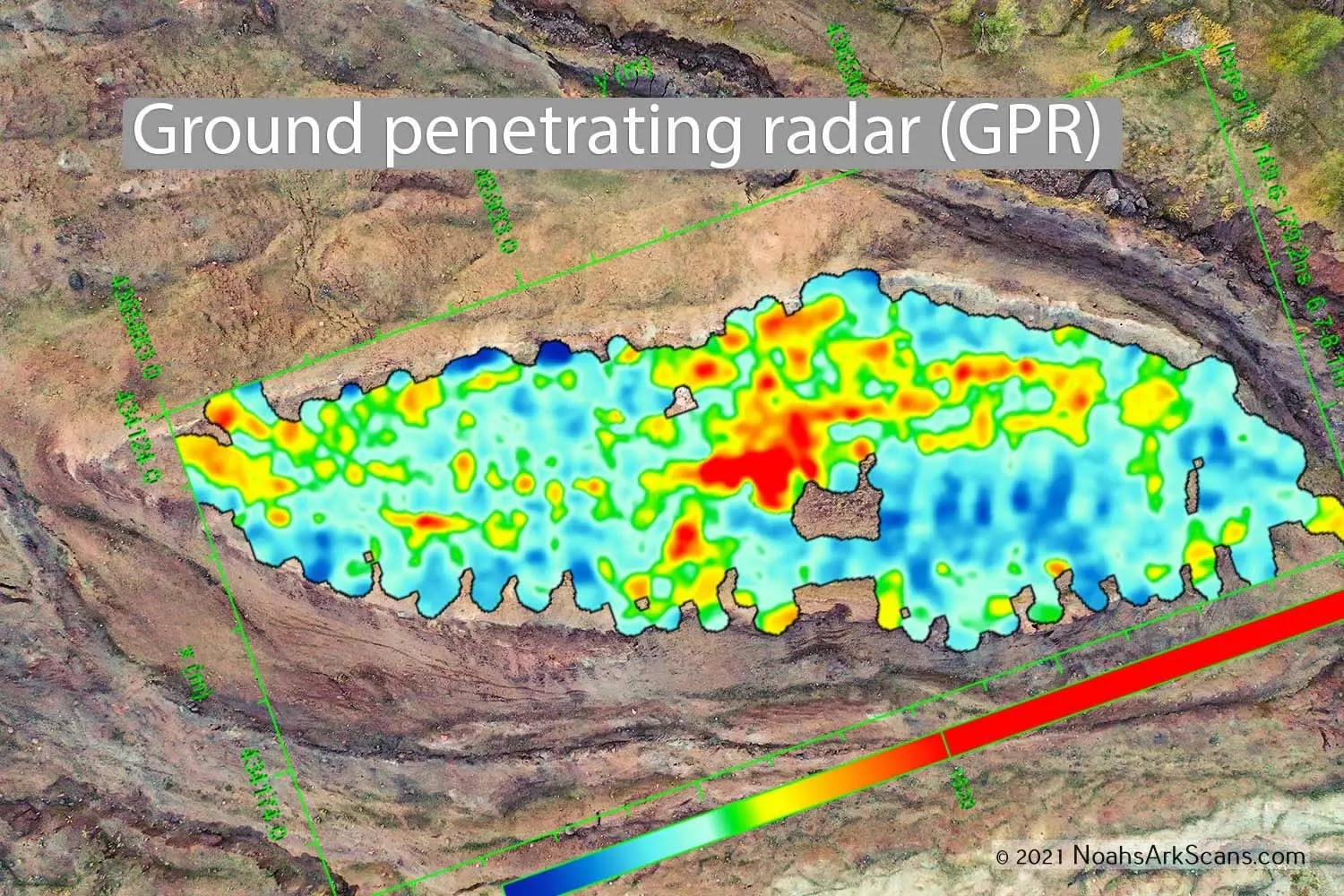
A radar scan of the Noah’s Ark site in the mountains of Eastern Turkey.


Jones works with Noah’s Ark Scans, which he described as a “loose organization of individuals interested in pursuing scientific work and promoting” the site of the ark.

Jones and his team were attempting the solve the age-old question of whether the legendary vessel is buried in the mountains of eastern Turkey — roughly 18 miles south of Mount Ararat, which the Bible describes as the boat’s final resting place.

The exact spot is the Durupinar site, a 538-foot-long boat-shaped mound — with the same Book of Genesis-described dimensions as the Ark said to have saved humanity and animals alike from a catastrophic flood more than 4,300 years ago.

While the idea that this area houses the legendary life-raft — an object central to Christianity, Judaism, and Islam — is a topic of dispute, recent scans appear to indicate that it could be the case.

Jones used ground-penetrating radar to detect what appeared to be a 13-foot tunnel traversing the center of the formation, the Daily Mail reported.

These same scans captured a trifecta of subterranean layers that were alleged dead ringers for the Bible’s description of the boat’s three decks — in other words, it was literally “ship-shape.”

The Book of Genesis 6:16 states: “Make a roof for the ark, and finish it to a cubit above, and set the door of the ark in its side. Make it with lower, second, and third decks.”

Meanwhile, new analysis of the radar data allegedly revealed “central and side corridors or hallways running through the boat.”

Given the age of the alleged vessel, Jones said he doesn’t expect to find anything “fully preserved,” claiming that the remains constitute a “chemical imprint, pieces of wood and in the ground, the shape of a hall.”

Also uncovered were angular structures situated 20 feet beneath the surface that the team surmises could be quarters beneath a deck-like surface — making this potentially more than just a geological formation as many scientists have posited.

“This is not what you’d expect to see if the site were simply a solid block of rock or the result of random mudflow debris,” said Jones, who felt it instead matched the Biblical specifications of Noah’s Ark.

The ark was described in The Bible as measuring approximately 515 feet long, 86 feet wide, and 52 feet tall.

But was this actual evidence or just a case of life imitating Ark? The organic matter found around the site seems to suggest that this wasn’t just some Indiana Jones-evoking urban legend, per the team.

“We noticed that the grass growing within the boat-shaped formation is a different color compared to the area just outside it,” said Jones, who believed this discrepancy suggested a human-made origin.

Meanwhile, an examination of 22 soil samples collected from the site revealed that the suspected structure had lower pH levels, two times the organic matter — and 40% more potassium — inside compared to outside the formation — discrepancies the team deemed “consistent with rotting wood.”

“If you know soil science — as I’m a soil scientist — you’ll understand that potassium levels, organic matter, and pH can all be influenced by decaying organic material,” said William Crabtree, another member of Noah’s Ark Scans. “If this was a wooden boat and the wood had rotted over time, we would expect to see elevated levels of potassium, changes in pH, and higher organic content — and that’s exactly what we’re finding.”

In the future, the team hopes to conduct a core drilling survey along with additional ground-penetrating radar scans around the repository to better discern what lies beneath, CBN reported.

“We want to compare what’s inside the formation to what’s outside,’ Jones said. “That could give us a much clearer picture of whether this is truly something man-made.”

Michael Goodwin: Trump recklessly accepting a plane from Qatar is the type of unnecessary risk that could ruin his presidency


Over the years, numerous studies, speeches and books have focused on a phenomenon known as self-sabotage.

The subjects are highly successful people who throw it all away by behaving recklessly when they get to the top of the heap.

Think Bill Clinton and Monica Lewinsky.

Overconfidence, boredom, and an insatiable quest for power are among the reasons commonly identified as explanations for the destructive cycle.

Comes now Donald Trump, who is behaving in ways that risk his name being added to the list of the notoriously foolhardy.

In his case, the mystery would be why Trump appears willing to ruin a perfectly good presidency by engaging in financial dealings that are suspect and unnecessary.

His success, his legacy, the MAGA movement and America’s place in the world all hang in the balance.