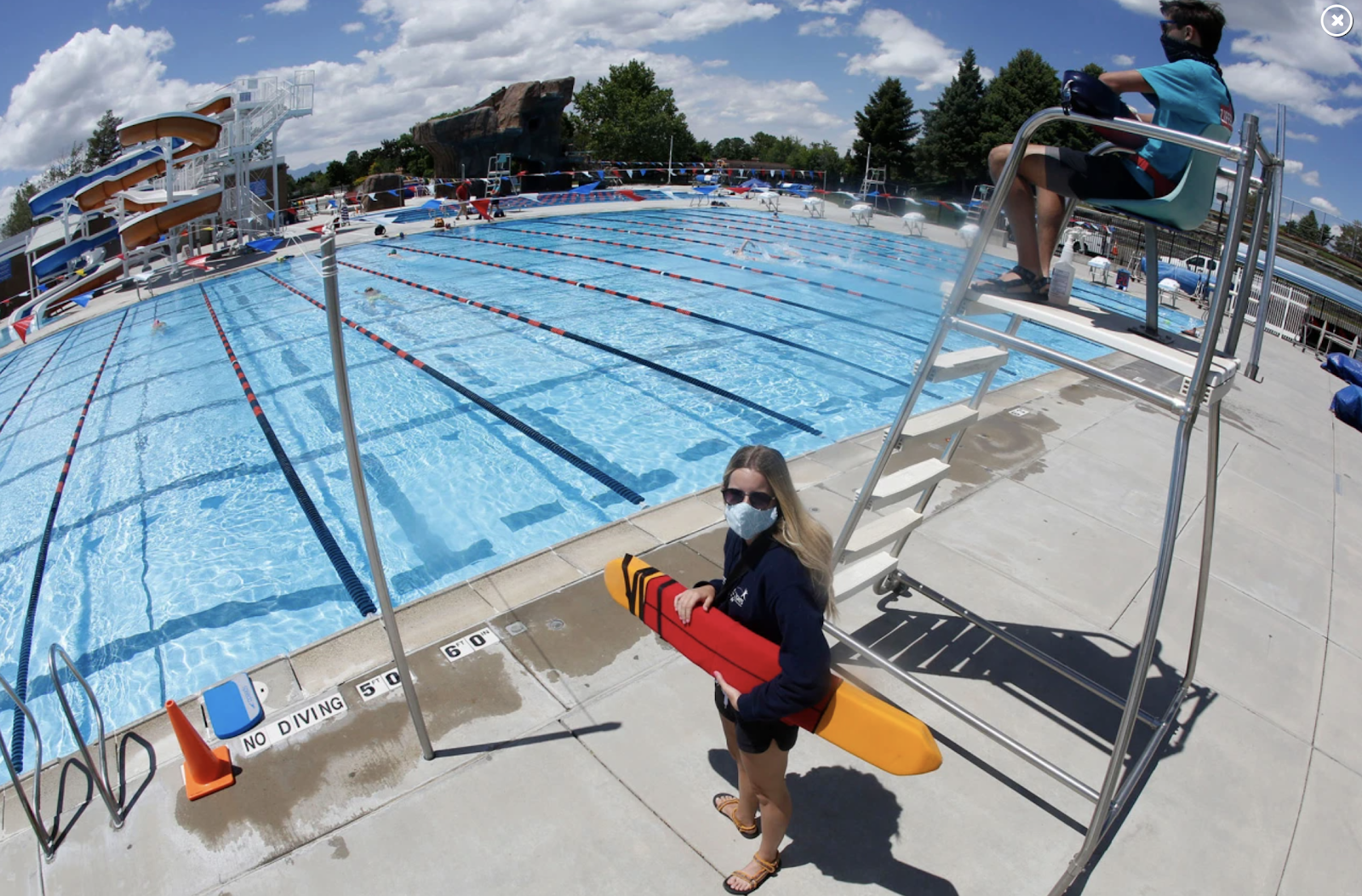
Everyone into the pool — just remember to leave your face mask on deck.
While seemingly mundane activities — including attending religious services, getting a haircut and dining at your favorite restaurant — are all high-risk for catching COVID-19, swimming during the coronavirus appears to be relatively safe.
Experts report that the virus does not live in pool water. According to the Centers for Disease Control and Prevention, “There is no evidence that COVID-19 can be spread through the use of pools and hot tubs.”
But before you do your most obnoxious cannonball into the deep-end, here is what you need to know to ensure that an afternoon at the pool will not end with the virus swimming in your bloodstream.
Does chlorine kill the coronavirus?
Chlorinated pool water is fatal for the miserable microbe. “The average amount of chlorine in a pool is going to kill the virus,” Roberta Lavin, professor of medicine at University of Tennessee’s College of Nursing, tells US Masters Swimming.
Does saltwater kill the coronavirus?
Similarly, scientists report that coronavirus is unlikely to thrive in ocean water. It prefers human saliva to, say, the Coney Island surf. And while fresh water may not kill this vicious virus, the likelihood of being infected on a lake is remote. “You’d probably have to drink the entire lake to get an infectious dose of the coronavirus,” Paula Cannon, a professor of molecular microbiology and immunology at USC’s Keck School of Medicine, told the Los Angeles Times. “The dilution effect is so humongous.”
KINDLY SUPPORT OUR BLOG BY BROWSING THE ADS
THANKS SO MUCH, IT MEANS A LOT ESPECIALLY IN THESE DIFFICULT TIMES!


