

My family and I live in Ramat Bet Shemesh, a burgeoning city in the middle of biblical Israel’s Shfelah region. The Shfelah is the rolling hills and fertile valleys west of the mountains surrounding Jerusalem, and is part of the tribe of Yehuda’s (Judah) homeland.
When the Jewish nation originally entered Israel, some 3300 years ago, most of the Shfelah was occupied by the Philistines, an ancient sea-faring people. Even after most of Canaan became Israel, the Philistines (who weren’t exactly Canaanites) continued to live in the Shfelah - not as friendly neighbors, but using the area as a base to raid and harass Jewish cities and towns.
Finally, around 2900 years ago, a young boy named David knocked down their giant warrior Goliath with a little stone he pulled out of the Elah Stream right over the hill from our home. The Philistines retreated to their coastal enclaves (like Gaza), opening the Shfelah to Israel.
From that day onward, although King David and his dynasty ruled from nearby Jerusalem, most of his large tribe of Yehuda (Judah) lived and farmed in the Shfelah. For most of both Temple Periods, this was the center of Jewish life in ancient Israel, where regular people worked, married, raised children, studied, prayed, and squabbled over the price of eggs.
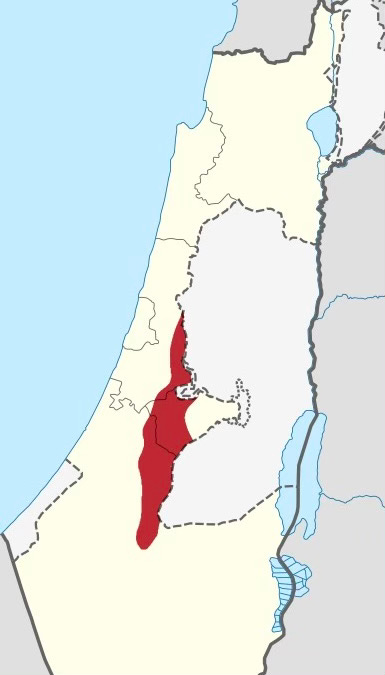
Perhaps that’s why I feel so comfortable hiking and camping in this area. The land here is beautiful - but less dramatic than the desolate Negev desert, the sloping peaks of the Galil, and the stunning canyons and streams of the Golan. People drank here from plain old wells.
The Shfelah feels like home.
The Shfelah feels like home.
Several weeks ago, as war raged in Gaza right down the road, I hopped off a bus right outside the modern incarnation of the Shfela’s Roman-era town of Bet Guvrin, and hopped on the trail as the last rays of daylight fell away.


